 how-to
7 Steps to Get a Mold Inspection for Your Home
Last Updated: October 31, 2026
Quick Summary
To get a mold inspection, first verify that your inspector holds an active Tennessee license at verify.tn.gov, then choose an independent inspector who does not perform repairs. Book early, since a standard inspection takes 3 to 4 hours.
- Check the inspector's license at verify.tn.gov before you hire anyone.
- Choose an inspector who does not perform repairs or take direction from real estate agents.
- Ask whether the inspector sells repair work and how long a standard inspection takes.
- A standard inspection takes 3 to 4 hours, and reports arrive within about two business days.
- Clear access to attics, crawl spaces, and closets so the inspector can see behind items.
Table of Contents
- Why a Mold Inspection Matters Before You Buy or Sell
- Mold Inspection vs. Mold Testing: Which Do You Need?
- Step 1: Verify Your Inspector's Tennessee License
- Step 2: Choose an Independent Inspector and Book Your Appointment
- How to Prepare for a Mold Inspection
- What Happens During the Inspection and Report
- Booking Your Mold Inspection in Knoxville
- Frequently Asked Questions
Why a Mold Inspection Matters Before You Buy or Sell
Mold can hide behind drywall, under flooring, and inside crawl spaces for years before anyone sees it. For a buyer, that means a house can look clean on a walkthrough and still carry a moisture problem.
In East Tennessee homes, humidity can be high and crawl spaces and basements can stay damp. Learn how to keep mold out of your bathroom and other damp areas. A mold inspection gives you a clearer picture of what is happening in the home so you can decide what to do next.
Here is what that information lets you do:
- Negotiate with facts. You can ask for repairs, credits, or a price change based on documented findings.
- Plan your budget. You learn whether a problem is a simple moisture fix or something that needs a larger scope of work.
- Walk away with confidence. If the issues are serious, you know that before you are locked into the purchase.
Mold Inspection vs. Mold Testing: Which Do You Need?
This is the question that trips up most buyers and sellers, so it is worth slowing down. A mold inspection and mold testing are two different services, and one is not automatically better than the other.
A mold inspection is a visual assessment. The inspector looks for conditions that support mold growth: moisture intrusion, elevated humidity, condensation, poor drainage, and visible growth. To see how mold is commonly managed and what treatment involves, read about fighting the growth of mold.
Mold testing involves sampling. Samples are collected and sent to a laboratory for analysis.
- Air samples. A calibrated pump pulls a measured volume of air through a collection device. Results are reported as a count of spores per cubic meter, often compared against an outdoor control sample taken at the same time.
- Surface samples. A swab or tape lift is taken from a visible area of growth. This can help identify what is growing on a specific surface, but it says nothing about the air in the rest of the home.
A lab report tells you what was captured in that sample, on that day, under those conditions. It does not tell you the extent of a problem behind a wall, and it cannot establish whether a space is safe or unsafe.
A Simple Decision Guide
Use these questions to sort out what you actually need:
- Is there visible growth or a musty odor? Start with an inspection. Visible growth and odor are already evidence of a moisture problem. Sampling rarely changes the next step, which is finding and correcting the moisture source.
- Is there a known water history but no visible growth? An inspection can trace the moisture path. Testing may help if you need documentation, but the moisture source still has to be addressed either way.
- Is the home clean, dry, and odor-free? Testing usually adds little. A clean visual inspection does not rule out every hidden moisture problem, so if you have ongoing symptoms or a known water event, ask your inspector whether testing makes sense for your situation.
- Are you in a transaction and need a scope of repair? This is where a general assessment has limits. When significant mold is present and remediation is likely, an industrial hygienist is often the better next step because they can prepare a formal scope of repair that contractors can bid against.
At Integrity Inspection Service, standalone mold assessments are available. We do not perform remediation and we do not quote repair work, so the assessment stays objective. If the findings point toward a larger remediation project, an industrial hygienist may serve you better than a general assessment alone.
Step 1: Verify Your Inspector's Tennessee License
Tennessee requires home inspectors to hold a current license (tn.gov). Before you hire anyone, check that the inspector's license is active.
You can verify a license at verify.tn.gov. Search by the inspector's name and confirm the license is current and in good standing.
Inspectors operating with lapsed licenses are a real concern, so this check takes only a few minutes and is worth doing.
Step 2: Choose an Independent Inspector and Book Your Appointment
Not every inspector works the same way, and the differences matter more than most buyers realize. The report you receive should reflect what is actually in the home, not what keeps a transaction moving. That is what independence means in practice.
How to Spot a Conflict of Interest
The clearest conflict to watch for is an inspector who also sells remediation or repair work. If the same company inspects the home and then bids the fix, the recommendation and the revenue come from the same place.
A second, quieter conflict is realtor influence. Some inspectors depend on agent referrals for most of their business, and that pressure can shape how findings are framed.
Questions to ask before you book:
- Do you perform repairs, or quote repair work? If so, how do you separate the inspection from the repair recommendation?
- Do you take direction from the real estate agent on what to report or how to frame it?
- How long does a standard inspection take? A thorough inspection of a typical home takes 3 to 4 hours. If someone quotes a much shorter window, ask what they skip.
- When will I receive the report, and what format is it in?
- Are you licensed in Tennessee, and can I verify it?
At Integrity Inspection Service, we work for the client, not for any real estate agent. We do not perform repairs and we never quote repair work. That removes the secondary conflict of interest and keeps the report objective.
What to Ask Onsite
You do not need to attend the full inspection. In fact, we encourage clients to join for the summary at the end. Buyers on site can slow the process, and the full picture is clearer once every system has been checked. Homes are like jigsaw puzzles: the picture makes more sense when all the pieces are in place.
When you meet for the summary, ask:
- Which findings are safety hazards, which are major defects, and which are routine maintenance?
- What is the likely moisture source behind any growth you found?
- What would you check next if this were your home?
- Does anything here point toward specialized testing, and if so, what kind?
Book Early
Once you have chosen an inspector, book as early as you can, especially if you are working against a closing timeline. A standard inspection takes 3 to 4 hours, and larger homes, crawl spaces, or properties with significant issues take longer. The inspector will tell you directly if that is the case so you can plan accordingly.
The easiest way to get started is to get a quote online and choose a time that works for you.
Before you book, these are the questions the article recommends asking and the time a standard inspection takes.
| Question or fact | Why it matters | Note |
|---|---|---|
| Do you perform repairs or quote repair work? | Separates the inspection from the repair recommendation | Ask directly before booking |
| Do you take direction from the real estate agent? | Shows whether findings are shaped by the deal | Ask directly before booking |
| How long does a standard inspection take? | Reveals whether a thorough inspection is being offered | 3 to 4 hours for a typical home |
| When will I receive the report, and in what format? | Sets expectations for timing and delivery | Confirm when you book |
| Are you licensed in Tennessee? | Protects you from lapsed or unlicensed inspectors | Verify at verify.tn.gov |
How to Prepare for a Mold Inspection
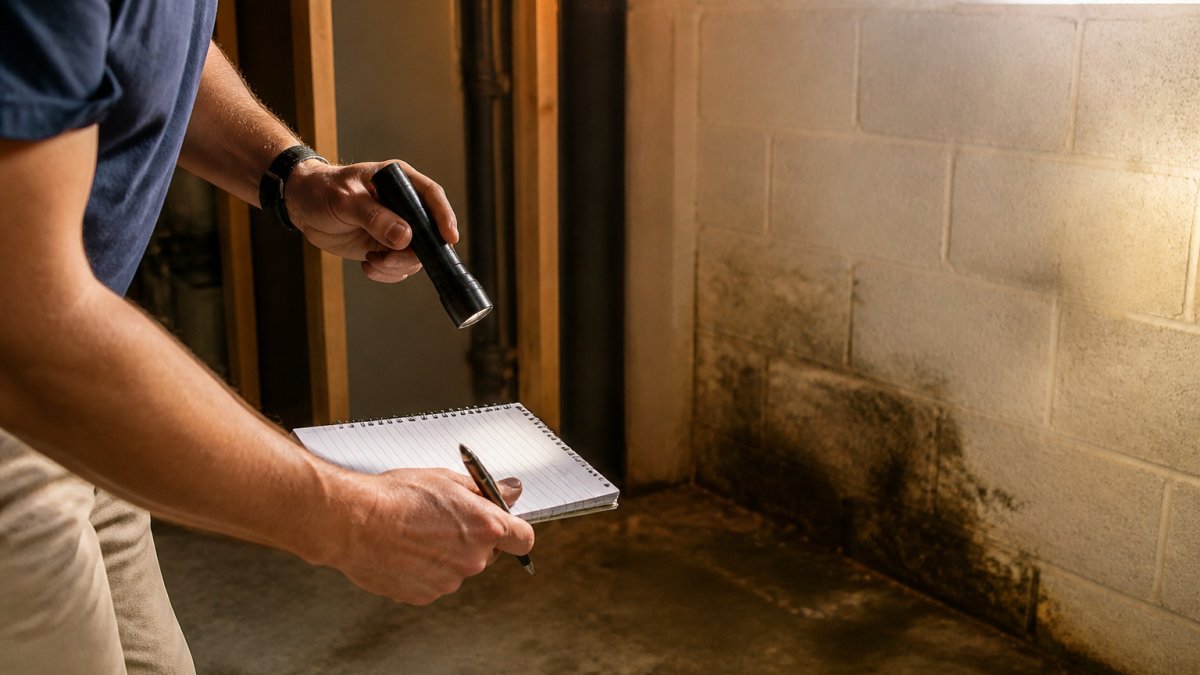
Preparation helps the inspector do a thorough job. A few simple steps make a difference:
-
Clear access. Move items away from walls, closets, and crawl space entrances so the inspector can see behind them.
-
Note any problems. Write down musty odors, past leaks, water stains, or areas that have been painted or repaired recently.
-
Gather records. Past inspection reports, repair receipts, and any water damage claims can point the inspector toward areas to check.
-
Plan for access to the attic and crawl space. Make sure the inspector can reach these areas safely.
Keep in mind that the inspection is visual and non-invasive. Anything that requires opening walls or specialized testing will be identified as a separate step.
What Happens During the Inspection and Report
A standard home inspection at Integrity Inspection Service takes 3 to 4 hours. Larger homes, crawl spaces, or properties with significant issues take longer, and the inspector will tell you directly if that is the case.
The inspector checks the home systematically, documenting moisture sources and any visible growth. Tennessee does not require inspectors to report minor items, but small findings add up.
When the report is ready, we aim to deliver it the same day or the next day. For most standard residential inspections, expect it by late evening on the second business day.
A useful report is a prioritized punch list, not a novel. Learn how to tell whether a home inspection report is useful before you rely on its findings.
Once you have the report, you can download it and use an AI tool such as Grok, ChatGPT, or Claude to help break down the findings, prioritize items, and draft questions. If the findings are difficult, see seven steps to take after a bad home inspection report.
We encourage clients to join for the summary at the end rather than attend the full inspection.
Booking Your Mold Inspection in Knoxville
Integrity Inspection Service is locally owned and operated, with over 20 years of hands-on experience in East Tennessee homes. We serve Knoxville and Knox County, and we regularly inspect homes in Blount, Anderson, Loudon, Sevier, Jefferson, and Union counties.
Final cost depends on the home's age, square footage, location, and any additional services. Payment is due before the summary if you attend, or before the report is delivered. We accept major credit cards, debit cards, ACH, Cash App, and Venmo.
The easiest way to get started is to get a quote online and choose a time that works for you.
Frequently Asked Questions
Does a home inspector check for mold?
A standard home inspection is a visual, non-invasive review of the home's systems and structure, and it may note visible signs of moisture or mold. It does not normally include mold sampling. If your inspector sees evidence of mold or moisture problems, they will tell you what they observed and recommend next steps, which may include a separate mold assessment. A general inspection can identify warning signs, but it cannot confirm the type or extent of mold without specialized testing.
Should I get a mold inspection before buying a house?
Many buyers choose one, especially when the home shows musty odors, water stains, past flooding, or poor ventilation in crawl spaces or bathrooms. Timing matters because you need results while you can still negotiate, request repairs, or walk away. A mold assessment is a useful addition to a home inspection when you have a specific concern, and the inspection report helps you decide whether further testing is worth the cost.
Do I need mold testing if I can already see mold?
Visible mold is a clear sign of a moisture problem, and it often means more growth may be hidden behind walls, under flooring, or in crawl spaces. Testing can help identify the type and extent of the problem, which matters for planning. If the area is large or remediation is likely, an industrial hygienist can develop a formal scope of repair, which is often more useful than a general assessment alone.
What happens during a professional mold inspection?
The inspector walks the property, looks for visible growth and moisture sources such as leaks, condensation, or drainage problems, and checks areas like attics, crawl spaces, and bathrooms. They may take surface or air samples for laboratory analysis, depending on the concern. Afterward, you receive a written report describing what was found and recommended next steps.