 how-to
Can a Home Inspection Be Done Without Electricity?
Last Updated: October 26, 2026
Quick Summary
Can a home inspection be done without electricity? Yes, but with important limitations. A home inspector can visually assess the structure, roof, foundation, and plumbing, but systems requiring electricity to operate, the electrical system, HVAC equipment, water heater, and appliances, cannot be tested without power.
- Without power, circuits, grounding, outlets under load, and fault protection cannot be tested.
- HVAC equipment, water heater operation, appliances, garage door openers, and well pumps cannot be started or evaluated.
- A good inspection report documents what was and wasn't tested and recommends a return visit once utilities are restored.
- Utilities should be on for a complete home inspection; ask the seller to restore service before your appointment.
- Untested systems represent unknown risk and should factor into your negotiation or decision to reschedule.
Table of Contents
- What You Can Expect When Power Is Off
- Home Inspection With Utilities Off: What Gets Skipped
- Should Utilities Be On for a Home Inspection?
- Home Inspection Limitations When Power Is Unavailable
- How an Inspection Report Records Unavailable Systems
- Home Inspection Reschedule: When Utilities Off Means Return Visit
- Your Next Step: Getting Clarity Before You Close
- Frequently Asked Questions
What You Can Expect When Power Is Off
Can a home inspection be done without electricity? Yes, but with important limitations. A home inspector can visually assess the structure, roof, foundation, and plumbing. Without power, anything that requires electricity to operate, much of the electrical system, HVAC equipment, and appliances, stays unchecked.
The inspection can still move forward, but systems that couldn't be tested affect what you know before you close.
The real question is whether you're comfortable moving forward with incomplete information about critical systems.
Home Inspection With Utilities Off: What Gets Skipped
Without power, some systems cannot be fully evaluated:
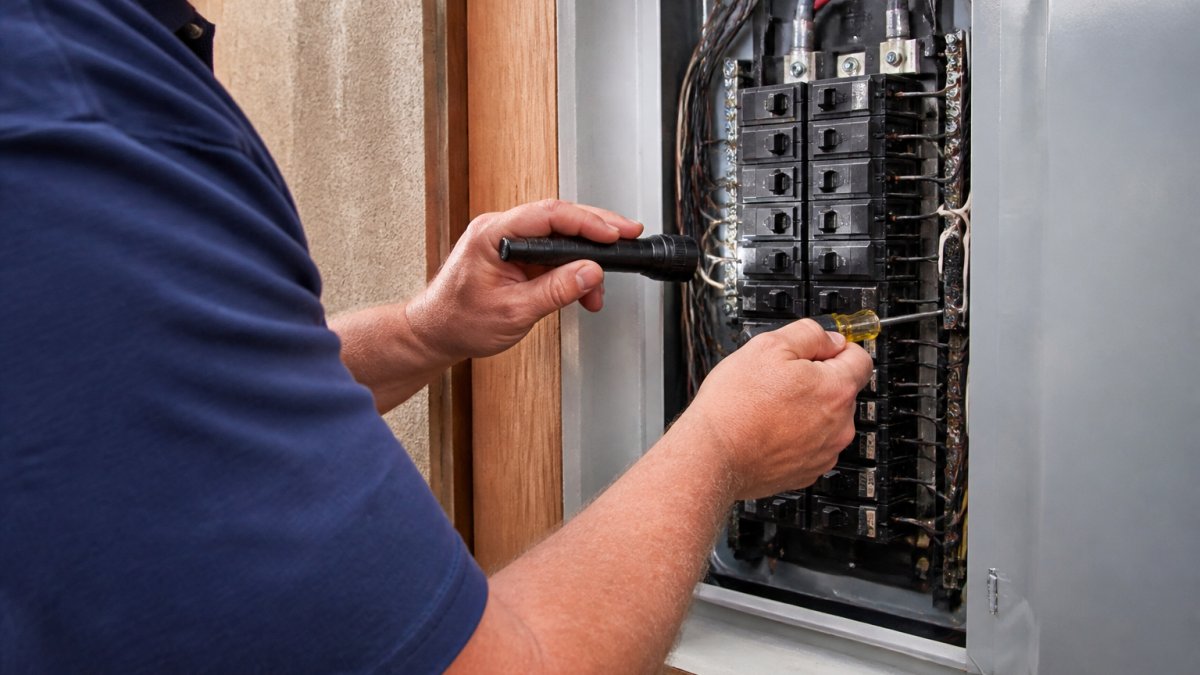
Electrical system testing. The inspector can look at the panel, wiring, and outlets visually, but cannot test whether circuits work, whether outlets are grounded, or whether the system is safe under load. Electrical problems don't always show up visually. Learn what electrical systems cannot be tested without power and why this matters to your inspection.
Water heater operation. A visual inspection shows age and condition, not whether it heats water.
Appliances. Ovens, refrigerators, dishwashers, and washers can't be tested for function, only noted for presence and age.
Garage door opener. Safety features and operation cannot be tested without power.
Well pump and septic system. A private well pump can't be tested, and septic components with electrical parts (aerators, pumps) can't be evaluated.
The visual inspection is valuable, but it's incomplete.
Without power, these critical systems cannot be fully evaluated during the inspection.
| System | What Cannot Be Tested | Visual Assessment Only |
|---|---|---|
| Electrical system | Circuits, grounding, outlets under load | Panel, wiring, outlets |
| HVAC equipment | Heating, cooling, operation | Age and condition |
| Water heater | Whether it heats water | Age and visible condition |
| Appliances | Function of ovens, refrigerators, dishwashers, washers | Presence and age |
| Garage door opener | Safety features and operation | Physical presence |
| Well pump and septic | Pump operation, electrical components | Visual inspection only |
Should Utilities Be On for a Home Inspection?
Yes. Utilities should be on for a complete home inspection.
A standard home inspection runs 3 to 4 hours.
If utilities are off when you schedule, ask the seller or their agent to restore them before the appointment.
Utilities may also be off because the home is vacant or service was disconnected. On a foreclosure or long-empty property, service may need to be reestablished, which takes time.
If power cannot be restored before your inspection date, you have options:
- Reschedule the inspection. Wait until utilities are on. This is the best choice for a complete evaluation.
- Proceed with a limited inspection. Understand that the report will note what couldn't be tested.
The goal is clarity before you close. Skipping the inspection to save time rarely saves money.
Home Inspection Limitations When Power Is Unavailable
When utilities are off, the report documents what was and wasn't tested. A good report is transparent about those limitations. Discover how circuit and electrical issues can be hidden when utilities are off and what risks that creates.
This isn't a failure on the inspector's part, it's a factual limitation. But it means you don't have complete information about systems critical to living in the home safely.
What this means for you as a buyer:
You can't confidently negotiate repairs or price adjustments for systems you haven't seen tested.
Some buyers accept this risk. Others don't. It depends on your comfort level and your timeline.
What this means for you as a seller:
If utilities are off during a buyer's inspection, you're making the sale harder, not easier.
How an Inspection Report Records Unavailable Systems
The report can help you decide what to do next.
The setup section
Near the front, the report should state the conditions of the inspection:
- Date and time of inspection
- Weather conditions
- Which utilities were on, off, or partially available
- Any areas the inspector could not access (locked crawl space, blocked attic hatch, sealed utility closet)
- Any systems that could not be tested, and why
This establishes the boundaries of what the report can and cannot tell you. If power was off, that belongs at the top.
How untested systems get classified
A useful report is a prioritized punch list, not a novel. Every finding, including the ones that couldn't be tested, should land in one of three buckets:
- Safety hazards. Anything that could injure someone or start a fire.
- Major defects. Systems that are central to living in the home.
- Routine maintenance. Smaller items that add up over time. Tennessee standards don't require inspectors to report minor items, but small things matter, and a complete picture includes them.
When power is off, an untested system is different from a system that was tested and passed.
What the line item actually looks like
Here's the pattern a good report follows for each unavailable system:
Electrical panel and circuits: Power was not available at the time of inspection. A visual evaluation of the panel and visible wiring was performed, but circuits, outlets, grounding, and fault protection could not be tested under load. Recommend a licensed electrician perform a functional evaluation once service is restored.
HVAC equipment: Equipment could not be started or operated. Age and visible condition were noted. Recommend a qualified HVAC technician evaluate operation, refrigerant charge, and heat exchange once power is available.
Water heater: Unit could not be operated. Visual condition and data plate information were recorded. Recommend functional testing once utilities are on.
Notice what these entries do: they tell you what was seen, what wasn't tested, why, and who should look next.
Photos still matter
Even without power, photos of the electrical panel, HVAC equipment, water heater, and other major systems show age, condition, and visible issues. A photo of a panel full of mismatched breakers tells you something a written description can't.
What this means at the negotiating table
This is where the report earns its keep. Untested systems are unknown risk, and unknown risk has a price. You have three paths:
- Ask for testing before you remove contingencies. The cleanest option. Have the seller restore utilities and schedule a return visit or a licensed electrician.
- Negotiate a credit for the unknown. Some sellers will agree to a closing credit rather than restore service. That's a business decision, not a technical one, but you should know what you're accepting.
- Accept the risk and plan for it. If you're buying a foreclosure or a long-vacant property, you may decide the price already reflects the uncertainty. Go in with your eyes open.
What you should not do is treat an untested system as if it passed.
Turning the report into a plan
Once you have the report, download it and upload it into an AI tool like ChatGPT, Claude, or Grok. Ask it to separate the safety hazards from the major defects from the maintenance items, and to list the questions you should ask before closing.
The goal is a report you can act on, not one you have to interpret alone.
Home Inspection Reschedule: When Utilities Off Means Return Visit
If utilities are off during the initial inspection, some systems may remain untested.
When a return visit makes sense
A return visit is worth scheduling when the visual inspection turned up something that only testing can confirm:
- The electrical panel looks older or has signs of amateur work, and you need to know whether circuits and grounding are sound.
- The HVAC equipment is near or past its expected service life, and you need to know whether it actually heats and cools.
- The water heater is old enough that operation matters to your decision.
- Outlets throughout the home need to be tested for grounding and function.
- A well pump or septic component with electrical parts needs to be verified.
If the home is new construction or recently renovated and the visual inspection was clean, a return visit may be less urgent, but the untested systems are still untested, and the report will say so.
Who is responsible for getting power back on
Responsibility usually breaks down like this:
- Seller: In a typical resale transaction, the seller or their agent arranges to have utilities transferred into the seller's name or kept active through the inspection period. This is a normal request and most sellers cooperate because a clean inspection helps them too.
- Buyer: On a foreclosure, short sale, or long-vacant property, the buyer often has to arrange service. That means contacting the utility provider, setting up an account, and sometimes paying a deposit or connection fee. In some cases the utility requires a visit to the property before service is restored.
- Inspector: Confirms what was and wasn't available, documents it, and schedules the return visit. The inspector does not restore service, that's not an inspector's role, and it shouldn't be.
Confirm it in writing before you book
Before you schedule the initial inspection, get written confirmation from the seller's agent that utilities will be on. An email is fine, a clear statement of which utilities (electric, water, gas) will be active and by what date. Verbal assurances have a way of evaporating the morning of the inspection.
If utilities can't be confirmed, decide up front whether you're proceeding with a limited inspection or rescheduling. Don't leave it to the day of.
What gets tested on the return visit
This second visit is focused. It's not a full re-inspection. It's targeted testing of the systems that couldn't be evaluated the first time:
- All circuits and outlets, including GFCI and AFCI protection where present
- HVAC equipment startup, operation, and basic temperature split
- Water heater function
- Appliances
- Garage door opener and safety reverse
- Well pump and any septic components with electrical parts
A return visit for electrical and mechanical testing typically takes 1 to 2 hours, depending on the size of the home and how many systems need to be exercised.
Timing and cost
Clarify the return-visit policy when you book your initial inspection. Practices vary:
- Some inspectors include a return visit in the original fee if they knew utilities would be off at booking.
- Some charge a separate trip fee for the return visit.
- Some will coordinate directly with a licensed electrician for the electrical portion, which is a separate cost.
Ask before you book, not after. A short conversation up front prevents a surprise later.
What the return visit changes for you
If you're facing an inspection with utilities off, get a quote online and tell us the situation. We inspect homes throughout Knoxville and Knox County and regularly work in Blount, Anderson, Loudon, Sevier, Jefferson, and Union counties.
Your Next Step: Getting Clarity Before You Close
The biggest mistake buyers make is accepting incomplete information to save time.
You're about to commit to one of the largest purchases of your life.
At Integrity Inspection Service, we work with buyers who want the full picture.
Get a quote online to schedule your inspection. Tell us if utilities are on or off.
Your job is to make a smart decision. Our job is to give you the facts that let you do it.
Frequently Asked Questions
Can a home inspection be done if the electricity is off?
A home inspection can proceed without power, but some systems may not be tested. The inspection is visual and non-invasive, and specialized testing may be needed for some concerns.
What parts of a home inspection cannot be completed without electricity?
Without power, some systems may not be tested. A standard inspection is visual and non-invasive, so it does not establish the function of every system or component.
Should utilities be turned on before a home inspection?
Having utilities available may allow more systems to be evaluated, but a standard inspection is visual and non-invasive and does not establish the function of every system. If utilities are off, some systems may not be tested.
Will a home inspection need to be rescheduled if there is no electricity?
Not necessarily. The inspection can proceed, but some systems may not be tested. A standard inspection is visual and non-invasive, so it does not provide a full functional assessment of every system.