 blog
Best Home Inspection Companies in Knoxville for Buyers
Table of Contents
- How First-Time Buyers Should Compare Home Inspection Companies in Knoxville
- What Does a Home Inspection Include in a Knoxville Home?
- Questions to Ask a Home Inspector Before You Book
- How Long Does a Home Inspection Take, and When Will You Get the Report?
- Home Inspection Report Examples: What a Useful Report Looks Like
- What to Do When the Report Finds Problems
- Conclusion: Choosing an Inspector You Can Trust
- Frequently Asked Questions
Last Updated: October 14, 2026
How First-Time Buyers Should Compare Home Inspection Companies in Knoxville
The best home inspection Knoxville companies for a first-time buyer put your interests ahead of the transaction.
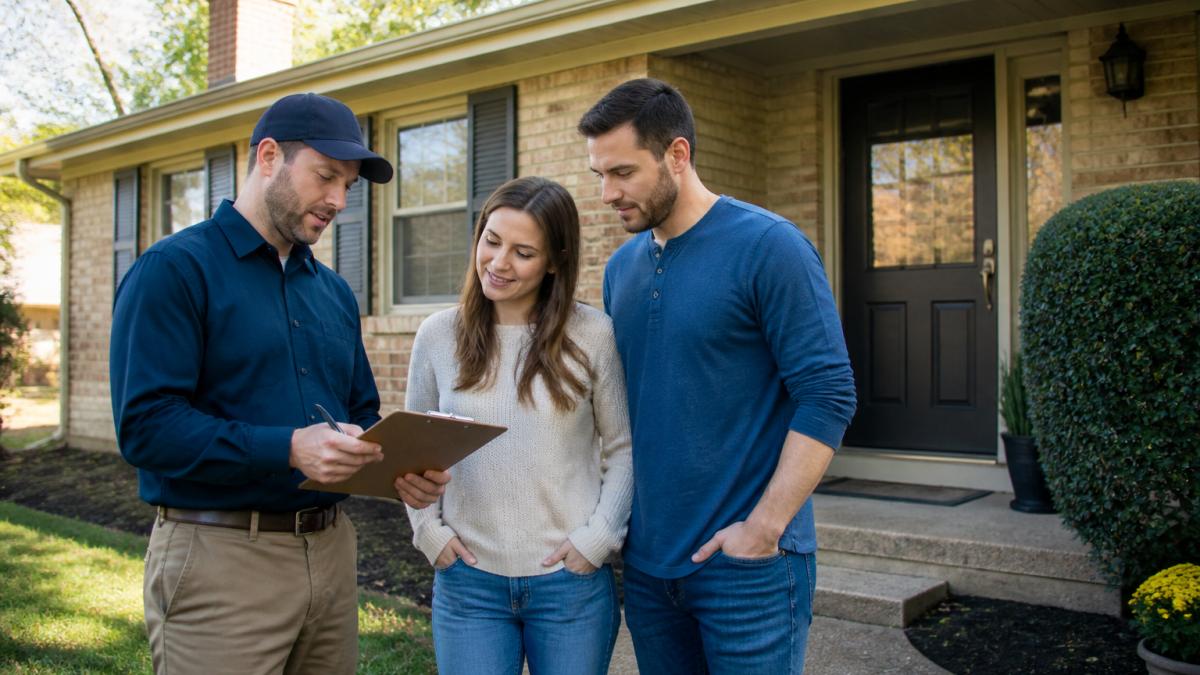
A home inspection is a visual, non-invasive evaluation of a property's systems and structure, performed to document condition before you commit to a purchase.
Most first-time buyers spend hours comparing mortgage rates and minutes comparing inspectors. That order is backwards.
Most "best of" lists online are directories or ads. They tell you who exists, not who fits your situation.
Start With Budget: What an Inspection Actually Costs
Pricing is the first thing most buyers ask about and the last thing most lists explain. Pricing is seasonally adjusted and depends on the home's age, square footage, location, and any add-on services.
Add-ons are where budgets drift. Radon testing, sewer scopes, and termite/WDI letters are separate services, each with its own fee. Ask for an itemized quote.
The Five Criteria That Separate a Useful Inspection From a Wasted One
1. Independence. Does the inspector have conflicts of interest, such as realtor influence or quoting repair work?
An inspector who relies on agent referrals or who quotes repairs may have a reason to shade findings. Independence means the inspector works for you and reports what they see without those pressures.
2. Credentials. Tennessee is a licensed state, so every home inspector must hold a current license. We have seen inspectors operating with lapsed licenses, so verify it yourself at verify.tn.gov.
Look for InterNACHI certification as well, which requires ongoing training and a standards-of-practice commitment. Also ask whether the inspector carries errors and omissions insurance.
3. Report usability. A report should read like a prioritized punch list, not a novel.
**4. An inspector who works here weekly knows where drainage problems show up and how crawl space vapor barriers fail.
5. Turnaround and communication. Ask when the report will arrive and how the inspector will walk you through it.
Criterion | Why It Matters | What to Verify |
|---|---|---|
Independence | No incentive to deflate or inflate findings | Ask if they provide realtor lunches or incentives and whether they quote or perform repair work |
Credentials | Baseline competence | State Licensing and Professional Certifications |
Report usability | You can act on findings | Request a sample report |
Local experience | Familiar with regional issues | Years working in the area |
Turnaround | Protects your contingency window | Ask for the delivery timeline in writing |
A Side-by-Side Way to Compare Two Inspectors
When you've narrowed it to two or three companies, here are some questions to run past each one:
- Are you free from realtor influence, or do you provide realtor lunches or incentives? (The answer should be no.)
- Do you perform repairs or quote repair work? (The answer should be no.)
- Are you licensed in the State of Tennessee?
- What certifications do you hold, and through which organization?
- Can I see a sample report?
- What is your report delivery timeline, and is expedited available?
- What is not included in your standard inspection?
- How do you decide which problems are significant enough to report on?
- Will you walk me through the findings at the summary?
If one company hesitates on independence or can't produce a sample report, that's your answer. If both pass, weigh turnaround and how clearly they explained the process. The inspector who takes time before you've paid is usually the one who'll take time on the report.
What First-Time Buyers Should Prioritize
If you're buying your first home, weight these in order: independence first, report usability second, turnaround third. A cheap inspection you can't act on costs more than a thorough one you can.
The goal isn't the cheapest inspector. It's the one whose report gives you the confidence to negotiate, plan, or walk away on your own terms.
What Does a Home Inspection Include in a Knoxville Home?
A standard home inspection covers the visible, accessible systems and structure: roof, foundation, exterior, HVAC, electrical, plumbing, attic, insulation, and interior rooms. It is visual and non-invasive, we report what we can see without opening walls or dismantling equipment.
What Is Not Included in a Standard Inspection
Specialty testing is separate. Radon testing, sewer scopes, mold assessment, and termite/WDI letters are add-on services. Radon is a real concern in this region, and the Tennessee Radon Program provides free charcoal canister test kits for homeowners who already own the property and aren't under a closing deadline.
Mold deserves a straight answer too. We offer standalone mold assessments, but when significant mold is present and remediation is likely, an industrial hygienist can prepare a formal scope of repair that a general assessment cannot.
Questions to Ask a Home Inspector Before You Book
Ask these before you schedule, and pay attention to how clearly the answers come back.
- Do you perform repairs or quote repair work? (The answer should be no.)
- What certifications do you hold, and through which organization?
- Can I see a sample report?
- What is your report delivery timeline?
- Will you walk me through the findings at the end?
- What is not included in your standard inspection?
- Do you offer radon testing, sewer scopes, or termite letters as add-ons?
We encourage clients to join for the summary at the end rather than follow along for the full inspection. Buyers on site can slow the process and make it harder to stay thorough. Homes are like jigsaw puzzles: the full picture is clearer once every system has been checked. Meeting at the end lets us walk through the findings with the complete picture in place.
How Long Does a Home Inspection Take, and When Will You Get the Report?
A standard single-family home inspection takes time depending on size, age, and condition. Larger homes or properties with significant issues take longer, and the inspector will communicate that directly.
Report delivery matters when you’re on a closing timeline. We aim to deliver most reports the same day or the next day. For most standard residential inspections, expect the report by late evening on the second business day. Expedited same-day reports are available if requested at booking. Larger homes or properties with significant issues may take longer, and the inspector will communicate that directly.
Ask about home inspection Knoxville turnaround before you book, not after. A report that arrives the day before your inspection contingency expires gives you no room to negotiate.
Home Inspection Report Examples: What a Useful Report Looks Like
A useful report sorts findings into safety hazards, major defects, and routine maintenance items, with clear locations and photos. That structure lets you decide what to ask the seller to address and what to plan for yourself.
Most sample reports online are either too polished to be real or too generic to be useful. Here's what to look for, and how to read it once it lands.
The Five Elements of a Report You Can Act On
- Photos with each finding, not just a written description. A photo of the actual crack, panel, or moisture stain tells you more than a paragraph.
- Plain-language explanations of why something matters. A finding should tell you what it is, why it matters, and what to do next, not just name a component.
- A summary that separates urgent items from maintenance notes. You should be able to read the first page and know what needs attention before closing.
- No repair cost estimates. An inspector who doesn't do repairs shouldn't be pricing them. If a report includes repair costs, ask who benefits from those numbers.
How Findings Are Prioritized
A report that lists 40 items in no particular order is technically complete and practically useless. The useful version groups findings so you know where to focus:
Safety hazards come first. Electrical issues, gas leaks, or structural concerns get addressed before anything else, usually by requesting repair or a credit.
Major defects come next. Roof, foundation, and HVAC problems carry significant cost. These are the items worth getting contractor estimates on before you finalize your request.
Maintenance items come last. These are yours to plan for after closing. They belong on a to-do list, not a negotiation.
When you open the report, read the summary first, then the safety section, then major defects. Only after that should you scroll through the full findings.
What to Do With Each Finding
For every item, you have four options: ask the seller to repair it, request a credit, renegotiate the price, or plan to handle it yourself after closing. The right choice depends on severity, cost, and how much you want the house.
A few practical rules:
- Get contractor estimates on major defects before you finalize your request. A real number from a licensed contractor in the relevant trade is worth more than a guess.
- Don't ask for everything. A long list of small requests can sour a negotiation. Focus on safety and major defects.
- Keep your contingency in mind. If your inspection contingency expires in three days, you need to move quickly, which is why turnaround matters when you book.
Questions to Ask After You Read the Report
- Which findings are safety issues versus maintenance items?
- Which findings need a specialist, an electrician, a roofer, a foundation contractor?
- If moisture or air quality came up, would an industrial hygienist be the right next call for a formal scope of repair?
- Which findings would I walk away over, and which would I plan for?
A report is a decision-making tool. If you finish reading it and still don't know what to do next, it failed. If you finish reading it and know exactly which items to negotiate and which to plan for, it did its job.
What to Do When the Report Finds Problems
Finding problems is the point. A report that surfaces a failing HVAC system or crawl space moisture gives you options you wouldn't have had otherwise.
Work through findings in order of severity:
- Safety hazards. Electrical issues, gas leaks, or structural concerns get addressed first, usually by requesting repair or a credit.
- Major defects. Roof, foundation, and HVAC problems carry significant cost. Get contractor estimates before you finalize your request.
- Maintenance items. These are yours to plan for after closing. They belong on a to-do list, not a negotiation.
You can ask the seller to repair, request a credit, renegotiate, or walk away if your contingency allows. That decision is yours, based on the full picture rather than one alarming line.
If your report raises questions about moisture or air quality, an industrial hygienist may be the right next call for a formal scope of repair.
Conclusion: Choosing an Inspector You Can Trust
The hardest part of buying your first home is the uncertainty. You're making a large decision with incomplete information, on a deadline, and every party in the transaction has an interest in it closing.
An independent inspector is the one professional in the room with no stake in the outcome. Integrity Inspection Service is locally owned, InterNACHI certified, and has more than 20 years of experience in East Tennessee homes.
Get a quote online and find out what you're actually buying before you commit.
Frequently Asked Questions
What should a first-time home buyer look for in a home inspection company?
Look for three things: independence, credentials, and a report you can actually use. Independence matters because some inspectors have undisclosed conflicts of interest—such as relying on realtor referrals, providing agent incentives, or paying marketing fees to agencies that steer business their way. An inspector free from those pressures reports what they see without worrying about future referrals. Credentials matter because Tennessee requires a current license (verifiable at verify.tn.gov) and organizations like InterNACHI require ongoing training. Report usability matters because a prioritized punch list with photos and clear descriptions tells you what to negotiate, what to plan for, and what is routine maintenance.
How do you compare home inspection companies in Knoxville?
Ask each company the same four questions: what is included, what costs extra, how fast the report arrives, and whether the inspector carries professional certification. Then compare answers side by side. A less thorough inspection that comes with a vague report and a two-week turnaround can cost you more in the end, especially on a tight closing timeline.
Is radon testing included in a standard home inspection?
No. A standard inspection is visual and non-invasive, while radon testing requires separate equipment and lab processing, so it is booked as an add-on. East Tennessee sits in an area where radon shows up often enough that testing is worth discussing. If you already own the home and have time, the Tennessee Radon Program offers free charcoal canister kits. During a transaction, an add-on test keeps everything on one schedule.
Should buyers attend the entire home inspection?
Most buyers get more value by joining for the summary at the end. The inspector can move through the home without interruption and stay thorough, then walk you through the complete picture once every system has been checked. You still get to ask questions face to face and see the findings explained in context. If you cannot attend at all, a phone walkthrough works too.
Do inspectors report on small issues?
Tennessee standards only generally require inspectors to report issues that are significantly deficient in function or safety, in the opinion of the home inspector. Minor items are not required. However, small things can add up. Some inspectors skip them because they are not required. A more complete report includes relevant minor findings so you have a clearer picture of the home’s overall condition.