 blog
Is a Professional Home Inspection Worth It in Knoxville?
Last Updated: November 1, 2026
Quick Summary
A professional home inspection gives buyers an objective look at a property's condition before they commit. It documents roof wear, foundation movement, moisture, and aging systems that are often invisible during a walkthrough. The report helps buyers negotiate, plan repairs, or walk away with confidence.
- Standard inspections typically take three to four hours for a single-family home.
- Verify your inspector's Tennessee license yourself at verify.tn.gov before booking.
- Ask whether the inspector performs repairs or has financial ties to your agent.
- Focus first on safety hazards and major defects when reading the report.
- Radon testing is an add-on to an inspection, useful when timing matters during a transaction.
Table of Contents
- Why a Professional Home Inspection Matters Before You Sign
- What a Thorough Home Inspection Covers
- How to Choose a Home Inspector You Can Trust
- Questions to Ask a Home Inspector Before You Hire
- How Long a Home Inspection Takes and Why Time Matters
- What a Useful Home Inspection Report Looks Like
- Booking Your Inspection and Getting Your Quote Online
- Frequently Asked Questions
Why a Professional Home Inspection Matters Before You Sign
Buying a home is likely the largest purchase most people ever make, and the problems that cost the most are often the ones you cannot see. A professional home inspection gives you an objective look at the property's condition before you commit.
Many buyers in Knoxville learn about deferred maintenance or hidden defects only after closing. Roof wear, foundation movement, moisture in a crawl space, and aging electrical or plumbing systems rarely announce themselves during a walkthrough. For a side-by-side look at what each one does for a buyer, see how the inspection compares to the appraisal.
What a Thorough Home Inspection Covers
A standard home inspection looks at the major systems of the house, including the roof, exterior, structure, foundation, heating and cooling, electrical, plumbing, and interior components. The inspector evaluates what can be seen and tested without tearing into walls or floors. That visual scope is an important limit to understand. A clean general inspection does not mean specialized testing is unnecessary.
Some items fall outside the standard inspection and need separate work. Radon testing is one example. If you are wondering whether mold concerns need a separate test, here is when to pursue one and how. We perform radon testing as an add-on to a home inspection, which is most useful when timing matters during a real estate transaction.
How to Choose a Home Inspector You Can Trust
Most buyers pick an inspector in a hurry, often from a short list handed over by their agent. That is exactly when a weak choice slips through. The good news is that a few concrete checks separate a thorough, independent inspector from one who will hand you a thin report. Use this as a practical scorecard.
1. Verify the license, every time
Tennessee requires home inspectors to be licensed, and licenses can be checked at verify.tn.gov. Do not take a logo or a badge as proof. Look up the license number yourself before booking. It takes about a minute and it is the single most important credential check.
2. Ask who the inspector actually works for
This is the question most buyers never ask. An inspector who relies on referrals from the agent on your deal may feel pressure to soften findings so the transaction keeps moving. Ask directly: Does the company perform repairs? Does it have any financial relationship with the agent or brokerage? A company that also sells repair work has a built-in reason to find, or avoid, certain items. Independence means the report is written for you, not for the deal.
3. Ask what “thorough” actually means in hours and scope
“Thorough” is easy to claim. Pin it down. A standard inspection runs three to four hours; larger homes, crawl spaces, or properties with significant issues take longer. Ask what is included and what is excluded, and which add-on services are available. A visual, non-invasive inspection has real limits, a clean general inspection does not mean specialized testing is unnecessary.
4. Read reviews for specifics, not stars
A five-star average tells you little on its own. Read for detail: Did the inspector explain problems in plain language? Did the report separate safety hazards from routine maintenance? Did the buyer feel rushed? Reviews that mention clear communication and a useful, prioritized report are worth more than a wall of generic praise.
5. Confirm how findings will be communicated
Ask how and when you will receive the report, whether the inspector will walk you through the findings, and how questions are handled afterward. A good inspector answers these plainly and without pressure. If the answers are vague, that is your answer.
6. Check the contract and complaint history
Before you sign, read the inspection agreement. Look at what the scope covers, what it excludes, and how disputes are handled. You can also check complaint history through the state licensing board. None of this is glamorous, but it is how you protect yourself before the inspection even starts. Specific environmental concerns often require specialized attention, so understanding how mold inspection costs factor into your overall budget ensures you are not blindsided by hidden issues during the closing process.
A trustworthy inspector will welcome these questions. If any of them make a company uncomfortable, that tells you something useful. When you are ready, get a quote online and we will confirm availability and the right package for your situation.
Questions to Ask a Home Inspector Before You Hire
Before booking, ask a few direct questions. How long will the inspection take? A standard inspection typically runs three to four hours, and larger homes, crawl spaces, or properties with significant issues take longer. Ask what the inspection includes and what it excludes, and which add-on services are available.
Ask how and when you will receive the report. Ask whether the inspector will walk you through the findings and how they handle questions afterward. A good inspector answers these plainly and without pressure.
Before booking, these are the direct questions worth asking, along with what the article says to expect for each.
| Question | What to expect | Note |
|---|---|---|
| How long will the inspection take? | Typically three to four hours | Larger homes, crawl spaces, or significant issues take longer |
| What does it include and exclude? | Scope varies by inspector | Ask which add-on services are available |
| How and when will I get the report? | A plain answer, not vague | Ask whether the inspector walks you through findings |
| How are questions handled afterward? | Answered plainly and without pressure | A good inspector does not push |
How Long a Home Inspection Takes and Why Time Matters
Plan on three to four hours for a standard single-family home. Time matters because a rushed inspection tends to miss things. Thoroughness is what separates a useful report from a superficial one.
Timing also matters for your closing schedule. Most standard reports are delivered by late evening on the second business day, and expedited same-day reports are available if you request them at booking. Larger or more complicated properties may take longer, and the inspector will tell you directly if that is the case.
What a Useful Home Inspection Report Looks Like
A report is the whole point of the inspection. If it is a 90-page novel full of boilerplate, you will skim it and miss the three things that actually matter. A useful report is a prioritized punch list: it tells you what is a safety hazard, what is a major defect, and what is routine maintenance, and it helps you decide what to do next. Here is how to tell whether the report you receive is useful for decisions.
The three tiers that matter
Think of every finding as landing in one of three buckets:
- Safety hazards, conditions that could injure someone or cause immediate damage. These come first because they affect whether you can safely occupy the home.
- Major defects, expensive systems or structural problems that will need attention soon, such as roof wear, foundation movement, or aging electrical and plumbing systems.
- Routine maintenance, smaller items that add up over time. Tennessee standards do not require inspectors to report minor items, and many skip them. We include relevant small findings because a complete picture helps you plan.
What good descriptions look like
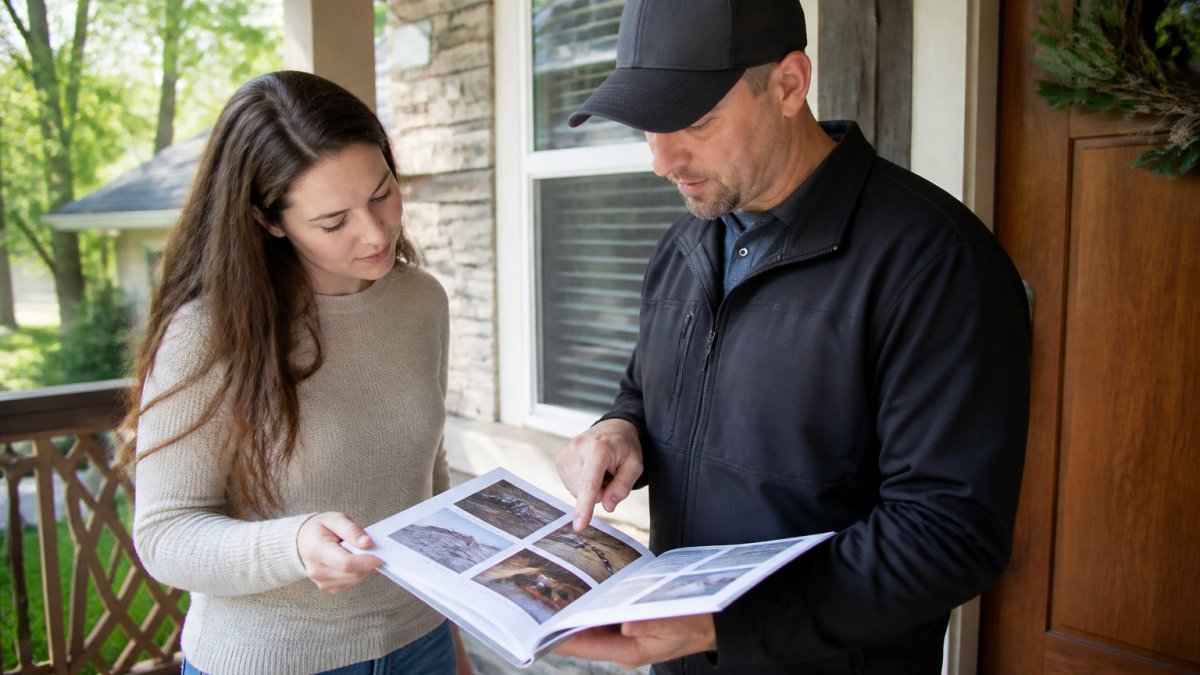
A useful finding describes the condition clearly, supports it with a photo when relevant, and states the recommended next step. We generally avoid pinpoint location labels because many issues are systemic rather than isolated to one spot, the goal is for you to understand the condition and what it means, not to chase a single spot on a diagram.
Turn the report into a plan
Once you have the report, download it and upload it into an AI tool such as ChatGPT, Claude, or Grok. Ask it to break down the findings, estimate repair costs, prioritize items, and draft questions for the seller or your agent. This is not a substitute for professional advice, but it is a fast way to turn a long document into a short action list.
Then schedule a short follow-up call. You can book a follow-up call to go over anything still unclear. The report is a tool for decision-making, not a sales pitch, and the follow-up is where you turn it into your next step.
Timing expectations
We aim to deliver most reports the same day or the next day. For most standard residential inspections, expect the report by late evening on the second business day. Expedited same-day reports are available if you request them at booking. Larger homes or properties with significant issues may take longer, and the inspector will tell you directly if that is the case.
When you are ready to move forward, get a quote online and we will confirm availability and the right package for your situation.
Booking Your Inspection and Getting Your Quote Online
Pricing is seasonally adjusted, and your final cost depends on the home's age, square footage, location, and any additional services you add. Payment is due before the summary if you attend, or before the report is delivered. We accept major credit and debit cards, ACH, Cash App, and Venmo, and Pay at Close through Spectora is available on certain packages.
The easiest way to get started is to get a quote online. Tell us about the property and we will confirm availability and the right package for your situation. Serving Knoxville and Knox County, and regularly inspecting homes in Blount, Anderson, Loudon, Sevier, Jefferson, and Union counties, we are ready to give you the clarity you need to move forward on your terms. Get a quote online.
Frequently Asked Questions
What should I look for when choosing a home inspector?
Start with the license. Tennessee requires every home inspector to hold a current license, and you can verify it at verify.tn.gov. Next, ask how long the inspector has been doing inspections, whether they carry professional credentials, and whether they perform repairs. An inspector who also does repair work has a conflict of interest, because findings can turn into sales. Finally, read recent reviews and ask for a sample report so you can judge how clearly the findings are written before you commit.
How do I verify a home inspector's license in Tennessee?
Go to verify.tn.gov and search the inspector's name or license number. The record shows whether the license is current. Check this before you book, not after the inspection. We have seen inspectors operating with lapsed licenses, so a quick check protects you. If the license is not active, the report may not hold up if a problem comes up later in the transaction.
Should I attend the entire home inspection?
We encourage clients to join for the summary at the end rather than attend the full inspection. Buyers on site can slow the process and make it harder for the inspector to stay thorough. A home is like a jigsaw puzzle, and the full picture becomes clear only after every system has been checked. Meeting at the end lets the inspector walk you through the findings with the complete picture in place, and you can ask questions about anything that matters to you.
How long does a home inspection usually take?
A standard home inspection takes 3 to 4 hours. A house can be finished in a couple of hours, but a rushed inspection can miss things. Larger homes, crawl spaces, and properties with significant issues take longer, and the inspector will tell you so directly. Report delivery is separate: most reports go out the same day or the next day, and for most standard residential inspections you can expect the report by late evening on the second business day. Expedited same-day reports are available if you request one at booking.