 listicle
What Should Be on Your Home Inspection Checklist?
Last Updated: November 4, 2026
Quick Summary
A home inspection checklist is a room-by-room list you use to walk through a home before the professional inspection. Check the exterior drainage, roof, attic, basement or crawl space, plumbing, electrical, HVAC, and fireplace, and mark each item OK, Watch, or Concern. It helps you prepare questions but does not replace a licensed inspection.
- Mark each item OK, Watch, or Concern so you can prioritize later.
- Check ground slope, standing water, and gutters first, since water is the most common cause of long-term damage.
- Note ceiling stains, sloping floors, and musty odors, which can point to moisture problems.
- Group your notes into safety, major repair, and routine maintenance before the inspection.
- Verify any Tennessee inspector's license at verify.tn.gov before you book.
Table of Contents
- Why a Home Inspection Checklist Matters Before You Close
- What Is Included in a Standard Home Inspection
- Printable Home Inspection Checklist: Room-by-Room Walkthrough
- What You Can Check Yourself and What Needs a Licensed Professional
- How to Prioritize Home Inspection Findings
- Hiring a Licensed Home Inspector in Tennessee
- Book Your Knoxville Inspection and Start Your Checklist Review
- Frequently Asked Questions
Why a Home Inspection Checklist Matters Before You Close
Buying a home in Knoxville is a big decision, and the risks are easy to miss.
Integrity Inspection Service works for the buyer, not for any real estate agent. Our report is objective, giving you the information you need to negotiate, plan, or walk away with confidence.
Think of a checklist as a way to organize your own observations. It does not replace a licensed inspection.
What Is Included in a Standard Home Inspection
A standard home inspection is a visual, non-invasive review of the home's major components. Our guide to reading a home inspection explains what inspectors check and how to interpret the findings.
The inspection generally covers the structure, exterior, roof, attic, interior, and major systems, including heating, cooling, plumbing, and electrical. Standard inspections are visual, so they do not include specialized testing.
Knowing this scope helps you use a checklist well. Your walkthrough is a preview, not a replacement for a full evaluation.
Printable Home Inspection Checklist: Room-by-Room Walkthrough
Use this checklist as a starting point. Print it, bring a pen, and jot down notes and photos as you go. Mark each item as OK, Watch, or Concern so you can prioritize later.
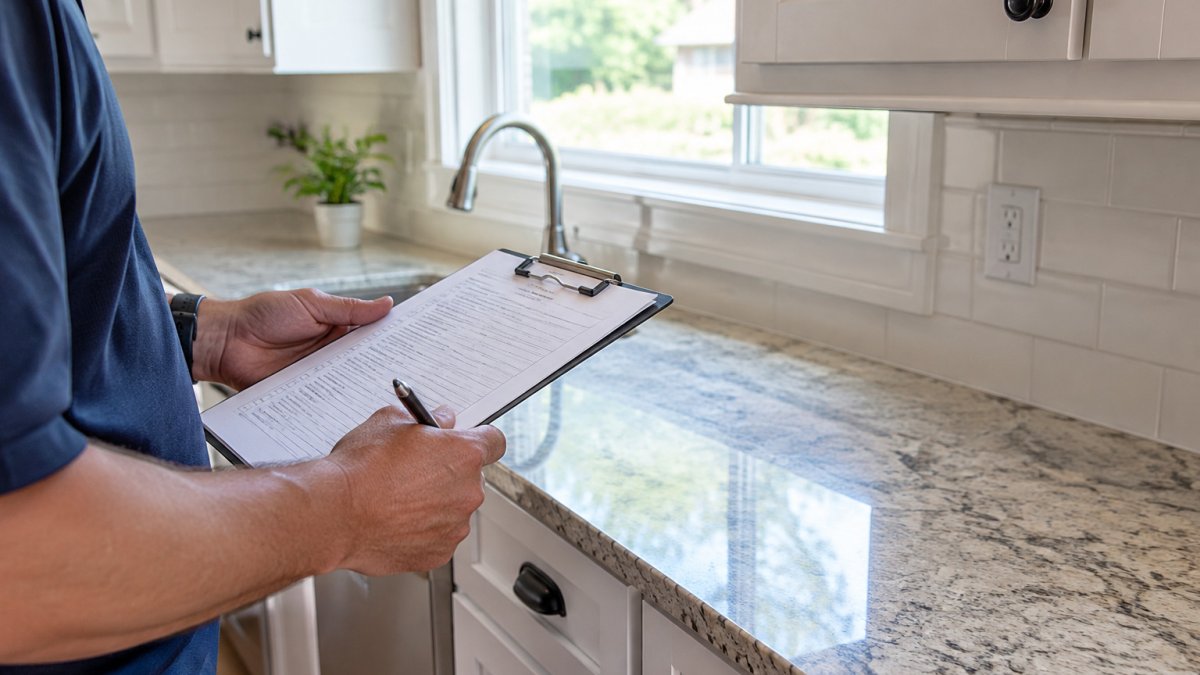
Check what you can see safely from a standing position. Do not move stored items, open electrical panels, climb on the roof, or enter a crawl space.
Exterior, Grading, and Drainage
Start outside. Water is the most common cause of long-term damage, and the exterior shows how well a home sheds it.
- Does the ground slope away from the foundation on all sides?
- Is there standing water after rain near the house or in the yard?
- Are siding, trim, and exterior walls free of cracks, gaps, or soft spots?
- Do gutters and downspouts appear attached, clear, and directing water away from the foundation?
- Are there visible cracks in the foundation or brick, or any areas that look stepped or uneven?
- Are walkways, driveways, decks, and stairs in reasonable condition?
- Do any tree branches touch or hang over the roof?
- Are there signs of wood-destroying insects, such as mud tubes or damaged wood near the ground?
Watch out: fresh paint over soft trim or a recently regraded yard can hide a drainage problem that shows up after the first heavy rain.
Roof, Attic, and Insulation
Roof and attic defects are hard to judge from the ground, so note what you can see and let the inspector check the rest.
- Are shingles missing, curled, cracked, or granule-worn?
- Do you see moss, algae, or areas where water appears to pool?
- Are flashing and vent boots intact around chimneys and pipes?
- If you can access the attic safely, look for water stains, dark wood, or damp insulation.
- Is attic ventilation visible, and does insulation look even and dry?
Roof leaks can travel a long way before they show up inside. Our page on finding roof leaks with thermal imaging explains how leaks are traced to their source.
Basement and Crawl Space
East Tennessee homes often sit on crawl spaces, and moisture there is a common pattern. Look only from a safe, dry vantage point.
- Is there standing water, damp soil, or a musty smell near the access?
- Are there visible stains, efflorescence (the white powder left by water moving through masonry), or rot on visible framing?
- Is the vapor barrier intact and covering the soil?
- Are foundation walls free of large cracks or bowing?
- Is the crawl space access clear and unobstructed?
Interior Rooms, Windows, and Doors
Inside, check for signs of moisture, movement, and wear.
- Do ceilings and walls show stains, bubbling paint, or cracks?
- Do floors feel sloping, bouncy, or uneven when you walk across them?
- Do windows open, close, and lock properly? Look for fogging between panes.
- Do exterior and interior doors latch and close square?
- Do you notice musty odors, which can point to moisture or possible mold?
- Do outlets, switches, and light fixtures work when tested?
- Do faucets, toilets, and drains run without leaks or slow drainage?
Plumbing Systems
- Do you see active leaks, corrosion, or water stains under sinks and around supply lines?
- Does water pressure seem reasonable at more than one fixture?
- Do toilets flush firmly and refill without running?
- Are there signs of a slow drain in more than one location?
- Is the water heater visibly damaged, leaking, or past its typical service life?
Electrical Systems and Safety
- Do outlets and switches work, and are any warm to the touch?
- Are there missing cover plates, exposed wiring, or extension cords used as permanent wiring?
- Does the panel (viewed only from outside, with the cover closed) show rust, scorching, or a tangle of unlabeled breakers?
- Do ground-fault outlets near water trip when tested?
Heating, Ventilation, and Air Conditioning
- Does the system respond when you adjust the thermostat?
- Do you hear unusual noises, or feel weak airflow at more than one vent?
- Is there visible rust, soot, or moisture around the equipment?
- Are filters reasonably clean?
Fireplace and Chimney
- Is the firebox free of heavy creosote, cracked brick, or loose mortar?
- Does the damper open and close?
- Is there a visible cap or spark screen on the chimney?
How to Document What You Find
A checklist is only useful if you can turn it into questions.
Then group your notes into three buckets before the inspection: safety, major repair, and routine maintenance. That sorting turns a long list into a decision and lines up with how a useful report is organized, so you can compare your notes to the findings and ask better follow-up questions.
If you want a starting point you can print and carry, get a quote online and we will help you plan the inspection that fits your home and timeline.
Each area of the home has a few things worth checking, and the article's checklist sorts the main concerns by area.
| Area | What to check | Mark as |
|---|---|---|
| Exterior and drainage | Ground slope, standing water, foundation cracks | OK, Watch, or Concern |
| Roof and attic | Missing shingles, flashing, attic stains | OK, Watch, or Concern |
| Basement and crawl space | Standing water, musty smell, vapor barrier | OK, Watch, or Concern |
| Interior | Ceiling stains, sloping floors, window and door operation | OK, Watch, or Concern |
| Plumbing | Leaks, water pressure, slow drains | OK, Watch, or Concern |
| Electrical | Warm outlets, exposed wiring, panel rust | OK, Watch, or Concern |
| HVAC | Thermostat response, airflow, rust or soot | OK, Watch, or Concern |
| Fireplace and chimney | Creosote, cracked brick, damper function | OK, Watch, or Concern |
What You Can Check Yourself and What Needs a Licensed Professional
A checklist helps you spot obvious concerns, but it does not replace a licensed inspector's evaluation. A visual walkthrough shows you symptoms, not causes. A stain on a ceiling tells you water got in; it does not tell you whether the source is a flashing detail, a vent boot, or a roof near the end of its life.
Here is a practical way to divide the work.
You can reasonably check yourself:
- Whether the ground slopes toward or away from the house
- Standing water, visible staining, or musty smells
- Whether windows and doors operate smoothly
Leave these to a licensed professional:
- Structural assessment of the foundation and framing
- Electrical panel, wiring, and system safety
- Heating and cooling system operation
When in doubt, write the item down and ask your inspector about it. A note that turns into a question is worth more than a guess.
Why a Clean Walkthrough Can Mislead You
A home can look tidy and still have problems a visual pass will not catch. Fresh paint over a water stain, a recently replaced section of siding, or a deodorized basement can all mask a recurring issue. The reverse is also true: a cosmetic crack in a driveway is often harmless, while a hairline crack in a foundation wall can matter.
Adapt the Checklist to the Property
The same list does not fit every home. Adjust your notes based on what you are buying.
- Older homes: pay closer attention to the electrical panel, older wiring, plumbing materials, and signs of past water intrusion. Older homes often carry a mix of updates and original systems.
- Condos and townhomes: the inspection generally covers the interior and systems within the unit, while shared roofs, siding, and common areas are typically handled by the association. Ask what the association maintains so you know what is and is not covered.
- Rural properties: if the home has a well or septic system, those are separate evaluations. A general inspection is visual and does not test water quality or septic function. Note their presence and plan for specialized testing.
Turn Your Notes into Questions
Before the inspection, sort your notes into safety, major repair, and routine maintenance. Bring the list to the summary at the end of the inspection rather than planning to walk the whole house with the inspector. The summary is where the complete picture comes together and the best time to ask about the items you flagged.
When you are ready, get a quote online and we will help you plan the inspection that fits your home and timeline.
How to Prioritize Home Inspection Findings
Not every finding carries the same weight. A useful way to sort them is by severity.
- Safety hazards: Exposed wiring, gas concerns, or a loose handrail. These need prompt attention.
- Major defects: A failing roof, foundation movement, or a damaged system. These can affect the price and your negotiation.
- Routine maintenance: Worn caulk, a dirty filter, or clogged gutters. These are normal homeownership tasks.
Group your notes into these three categories and tackle the safety items and major defects first. A good inspection report works the same way: it is a prioritized list, not a novel, helping you tell the difference between a serious concern and a small fix.
Once you have the report, you can use an AI tool such as ChatGPT, Claude, or Grok to help break down the findings and draft questions. Then book a short follow-up call.
Hiring a Licensed Home Inspector in Tennessee
Tennessee requires every home inspector to hold a current license. Before you book, verify the license at verify.tn.gov.
Ask how long the inspection will take.
Ask about the report. You should know when it will arrive and what it will include.
Ask whether the inspector is independent.
Pricing depends on the home's age, square footage, location, and any additional services you choose.
Book Your Knoxville Inspection and Start Your Checklist Review
Your checklist gets you started. A licensed inspection gives you the full picture. Integrity Inspection Service serves Knoxville and Knox County, and we regularly inspect homes in Blount, Anderson, Loudon, Sevier, Jefferson, and Union counties.
If you are ready to take the next step, get a quote online and we will help you plan the inspection that fits your home and timeline.
Frequently Asked Questions
What should I include on a home inspection checklist?
A useful home inspection checklist covers the foundation, grading and drainage, exterior walls, roof, attic, insulation, ventilation, basement or crawl space, interior rooms, windows and doors, plumbing, electrical, heating, and cooling. Note each area you can see, mark what looks worn or damaged, and write down questions to ask your inspector. A checklist helps you walk the home with a plan, but it does not replace a full inspection by a licensed professional who can test systems and access areas you cannot reach.
Are there items that a standard home inspection does not cover?
Yes. A standard home inspection is visual and non-invasive, so it does not include specialized testing such as radon testing, mold assessments, or sewer scopes. Those are separate services that may be added to an inspection. Standard inspections also do not move furniture, open walls, or evaluate concealed components. Ask your inspector to clearly explain what is included and what requires specialized testing before the inspection begins.
How long does a professional home inspection typically take?
A standard home inspection at Integrity Inspection Service takes 3 to 4 hours. Larger homes, crawl spaces, or properties with significant issues take longer, and the inspector will communicate that directly. Reports are usually delivered the same day or the next day, and most standard residential reports arrive by late evening on the second business day. Expedited same-day reports are available if you request them when you book.
Why should I hire a licensed home inspector in Tennessee?
Tennessee is a licensed state, so every home inspector must hold a current license. You can verify a license at verify.tn.gov before you book. Hiring a licensed inspector means someone who meets state requirements is evaluating the home. Integrity Inspection Service is independent and does not perform repairs, so the report stays objective and focused on what you need to decide whether to buy, negotiate, or walk away.