 listicle
Vacation Rental Problems a Home Inspection Can Catch
Last Updated: November 4, 2026
Quick Summary
A home inspection can catch the wear that vacation rental guests leave behind, including moisture in crawl spaces, worn HVAC and water heaters, electrical stress, and safety items guests rarely report. An independent inspection gives owners an objective condition picture before they buy, list, or plan repairs for a vacation rental.
- Crawl spaces in East Tennessee rentals often collect moisture from guest showers, laundry, and HVAC cycles.
- Filters left unchanged between guests and extreme thermostat settings age heating and cooling systems faster.
- Smoke and carbon monoxide detectors, stair handrails, and balcony railings are safety items guests rarely report.
- Sort findings into safety hazards, major defects, and routine maintenance before negotiating or planning repairs.
- Document the condition with photos before cleanup begins after any major issue during a booked stay.
Table of Contents
- Why Vacation Rentals Wear Out Faster Than Homes Lived In Full Time
- Common Maintenance Problems in Vacation Rental Properties
- Safety Items Guests Will Never Report on Their Own
- What a Short-Term Rental Property Inspection Covers
- Structural Concerns and Radon Testing Before You List
- How to Use the Report to Prioritize Repairs
- Scheduling Your Inspection Before the Next Guest Checks In
- Frequently Asked Questions
Why Vacation Rentals Wear Out Faster Than Homes Lived In Full Time
A vacation rental takes a beating that a full-time home never sees. Guests arrive every few days, run HVAC systems at odd settings, and use appliances they have never seen before. Turnover is constant, and so is the wear.
Short stays also hide problems. A guest who notices a dripping faucet may not report it, and a host may not be on site long enough to catch it. Small issues compound quietly until they become costly. An independent inspection gives you an objective picture of the property's condition, not a snapshot shaped by whoever last cleaned the place.
Common Maintenance Problems in Vacation Rental Properties
Vacation rentals tend to fail in predictable patterns. The value of knowing those patterns is that you can tell the difference between a cosmetic nuisance and a defect that will keep costing you money. Here is where the wear shows up first, and what each finding usually means. Recognizing these early signs makes vacation rental maintenance more effective, since addressing small defects before they spread can prevent a cosmetic nuisance from becoming a costly repair.
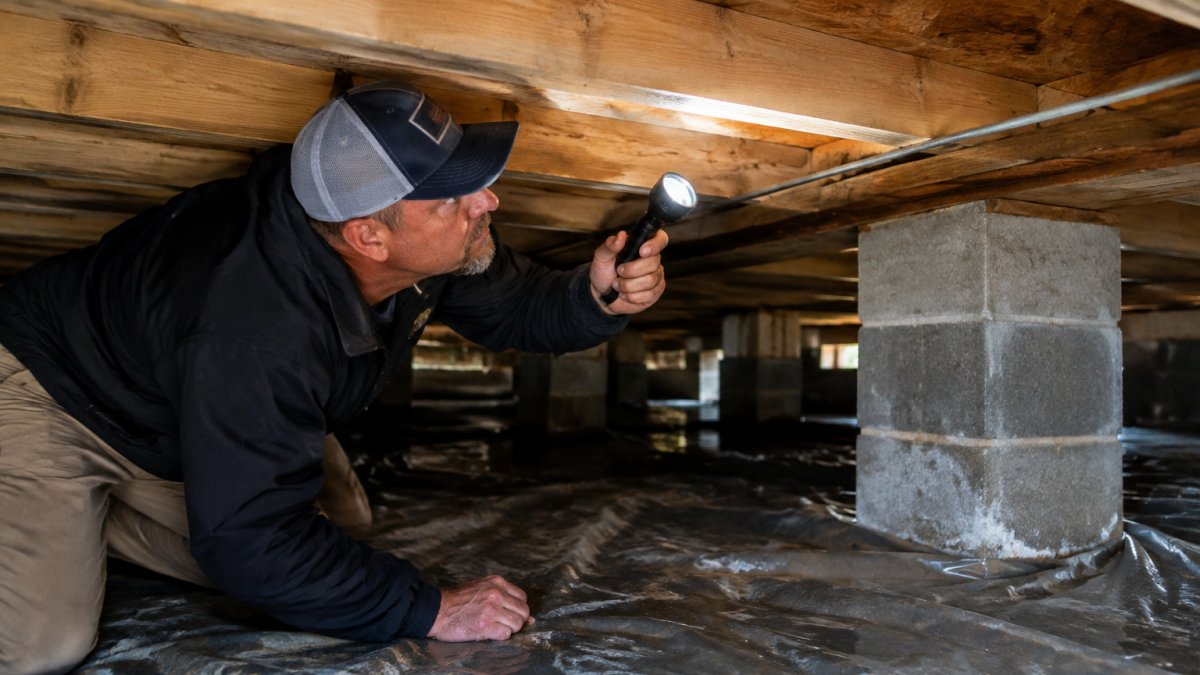
Moisture, Crawl Spaces and Drainage in East Tennessee Homes
Humidity is a constant factor in East Tennessee, and rentals concentrate it. Every guest shower, every load of laundry, and every HVAC cycle adds moisture to a house that is sealed up between stays. Crawl spaces are where that moisture usually lands.
A damp crawl space is not a single problem. Grading that slopes toward the foundation and gutters that discharge too close to the house feed the same chain from outside. EPA guidance on moisture control in homes explains how persistent dampness drives both mold growth and structural decay over time.
What this means for you: a crawl space finding is rarely about one joist. It is about whether the property has a drainage and ventilation strategy at all. That is a planning question, not a patch question, and it belongs in your budget before you negotiate.
HVAC, Water Heaters and Electrical Wear
Heating and cooling systems in rentals run harder and less predictably than in owner-occupied homes. Filters go unchanged between guests, thermostats get set to extremes, and equipment cycles on and off far more often. Water heaters see back-to-back showers that a family of four would never produce. Electrical outlets and panels take repeated plugging and unplugging of guest devices, chargers, and small appliances.
These systems rarely fail all at once. They age faster and fail sooner. An inspection tells you where each system sits in that arc, near end of life, mid-life, or recently replaced, so you can sequence replacement costs instead of absorbing them as surprises.
Appliances, Fixtures and the Small Stuff That Adds Up
Rental appliances are used by people who did not buy them and will not service them. Refrigerators, dishwashers, washers, and dryers in a rental often run several cycles a day during peak season.
We include relevant small findings, because in a rental the small items can be an early warning system.
A rental that looks clean and well staged can still hide deferred maintenance behind fresh paint and new bedding. An inspection helps separate presentation from condition.
Vacation rentals tend to fail in predictable patterns, and each one carries a different level of cost and urgency.
| System | Typical wear pattern | What it usually means |
|---|---|---|
| Crawl space | Moisture from guest showers, laundry, and HVAC | Drainage and ventilation strategy is missing |
| HVAC | Filters unchanged and extreme thermostat settings | Equipment near end of life sooner than expected |
| Water heater | Back-to-back showers between guests | Faster aging and earlier failure |
| Electrical | Repeated plugging and unplugging of devices | Outlets and panels take more daily stress |
| Appliances | Several cycles a day in peak season | Failures come sooner with no owner servicing |
| Supply lines and fixtures | Constant use and slow leaks | Leaks can run for weeks unnoticed |
Safety Items Guests Will Never Report on Their Own
Guests rarely mention a smoke detector that chirps or a missing carbon monoxide alarm. They assume the host has handled it. Yet these are the items that matter most for safety. Smoke and carbon monoxide detectors, handrails on stairs and decks, GFCI protection near water, and secure railings on balconies all deserve attention. For guidance on alarm placement, the U.S. Fire Administration home fire safety resources is a useful reference.
What a Short-Term Rental Property Inspection Covers
A standard home inspection is visual and non-invasive. It covers the roof, exterior, foundation, structure, attic, crawl space, HVAC, plumbing, electrical systems, and interior. A standard inspection takes about 3 to 4 hours. Larger homes, crawl spaces, or properties with significant issues take longer, and the inspector will tell you that directly.
For a rental, an inspection also helps you judge how the property has been used. Wear patterns on floors, stains near fixtures, and signs of repeated repairs all tell a story. Tennessee standards do not require inspectors to report minor items, but we include relevant small findings, because small things add up across a property that sees many guests.
Structural Concerns and Radon Testing Before You List
Before you list a rental, or before you buy one, structural concerns deserve early attention. Look for sloping floors, cracks that widen, doors that stick, and signs of past water intrusion. Foundation and framing questions often need a closer look than a visual check provides.
Radon is another item to consider. We offer radon testing as an add-on to a home inspection, and it is most useful when timing matters, such as during a real estate transaction. The EPA radon information for homeowners explains why testing is the only way to know a home's radon level.
How to Use the Report to Prioritize Repairs
Most guides stop at "read the report and fix the big stuff." That leaves out the part that actually matters: what you do in the first 48 hours after a finding lands, and how you recover when something goes wrong mid-season. A report is a decision tool, and the decisions come in sequence.
Step 1: Sort Findings Into Three Buckets
Every finding belongs in one of three groups: safety hazards, major defects, and routine maintenance. Safety hazards come first because they affect guests directly, smoke and carbon monoxide detectors, handrails, GFCI protection near water, and secure balcony railings. Major defects come second because they drive money and negotiation. Routine maintenance goes on a calendar, not a to-do list you will never finish.
Step 2: Decide Before You Negotiate
For a buyer, the report tells you which findings are worth negotiating and which are simply the cost of owning an older home. For a seller, it tells you what to disclose, what to address before listing, and what a buyer's inspector will likely flag anyway. Getting estimates on major defects before you sit down at the table keeps the conversation about facts rather than reactions.
Step 3: Build a Recovery Plan for the Issues That Cannot Wait
This is the part most rental guides skip. When a major issue surfaces, a failed water heater during a booked weekend, a roof leak after a storm, a double booking that leaves a guest without a unit, the recovery workflow matters as much as the repair.
A practical sequence looks like this:
- Stabilize the property first. Stop water, shut off power to affected circuits, and make the space safe before anything else.
- Document the condition with photos before cleanup begins. This protects you with your insurer and with the guest.
- Contact the guest before they contact you. A clear message about what happened, what you are doing, and what their options are does more for retention than a discount applied after the fact.
- Line up the trade. Because we do not perform repairs and never quote repair work, the report gives you an objective list to hand to a licensed contractor of your choosing, no conflict, no upsell.
- Follow up after the stay. A short check-in after a disruption is where trust is rebuilt or lost.
Watch out: skipping documentation because you are in a hurry to fix the problem is the most common recovery mistake. Without photos and a written record, an insurance claim or a guest dispute becomes a he-said-she-said.
Step 4: Put the Report to Work With AI and a Follow-Up Call
Download the report and upload it into an AI tool such as ChatGPT, Claude, or Grok to break down findings, estimate repair ranges, and draft questions for contractors. Then book a short follow-up call through our Calendly link to talk through anything unclear. The goal is not a longer report, it is a shorter list of decisions you feel confident making.
Get a Quote Online when you are ready to schedule.
Scheduling Your Inspection Before the Next Guest Checks In
The best time for an inspection is before the next guest arrives or before you make a purchase commitment. Inspections are most useful when they happen while the property is still in your control.
We aim to deliver most reports the same day or the next day, and expedited same-day reports are available if you request them at booking. Ready to get started? book a home inspection in Knoxville and we will confirm timing and next steps.
Read more about how vacation rentals affect a home's condition over time. If moisture is a concern, our guide to damp crawl spaces and their effect on the home explains what to watch for, and our note on carbon monoxide safety covers an item guests rarely report.
Frequently Asked Questions
What are common issues with vacation rentals?
Vacation rentals tend to show wear faster than owner-occupied homes because of frequent turnover, heavy use of appliances, and irregular occupancy that can let moisture build up. The most common issues include worn HVAC filters and systems, water heater problems, plumbing leaks under sinks and at toilets, loose or failing railings and deck components, and damaged flooring or wall finishes from guest activity. Drainage and grading problems and crawl space moisture are frequent concerns in East Tennessee. A professional inspection gives you a documented baseline so you can see what needs attention before guests arrive.
Can a home inspection help a vacation rental owner?
Yes. A home inspection gives a vacation rental owner an objective, documented view of the property's major systems and structure, including the roof, foundation, electrical, plumbing, HVAC, and safety items. Because inspectors do not perform repairs, the findings are not tied to selling work. The report works as a prioritized list: safety hazards first, then major defects, then routine maintenance. Owners can use it to plan repairs on their own schedule and to document the property's condition over time.
Why should I address structural concerns before listing a vacation rental?
Structural issues such as foundation movement, sagging floor joists, or water intrusion in a crawl space tend to get worse with use and changing seasons. Finding them before you list lets you decide how to handle them, rather than learning about them after a guest reports a problem. Identifying these items early also helps you plan the cost and timing of repairs and avoid disruptions to bookings. Knowing the true condition of the home is the first step to protecting both the property and your guests.
Does a home inspection include radon testing?
Radon testing is available as an add-on to a home inspection rather than as a standalone service. Radon is a naturally occurring gas that can accumulate in homes, and it is a common concern in parts of East Tennessee. Adding it to the inspection is most useful when timing matters, such as during a sale or before a property goes into rotation. For owners who already own the property and have time, the Tennessee Radon Program offers free charcoal canister test kits as an alternative.