 how-to
Radon Testing Before Buying a Home: What You Need to Know
Table of Contents
- Why Radon Testing Matters Before You Buy
- What Radon Is and Why It's a Concern in East Tennessee Homes
- How Long Does Radon Testing Take
- What Is a High Radon Level in a Home
- What to Do If a Radon Test Is High
- Radon Test Results and Home Purchase Negotiations
- Adding Radon Testing to Your Home Inspection
- Next Steps: Schedule Your Inspection and Testing
- Frequently Asked Questions
Last Updated: October 21, 2026
Why Radon Testing Matters Before You Buy
You inspect the roof, check the foundation, and test the HVAC system, but many buyers overlook something just as important: radon. This invisible, odorless gas seeps into homes from the soil beneath them, and it's a real concern in East Tennessee. Radon testing before buying a home gives you information that can affect your health, your finances, and your confidence in the purchase.
Radon testing before buying isn't just a precaution, it's a practical tool that lets you negotiate repairs, budget for mitigation if needed, or walk away if the numbers don't work.
Radon testing is straightforward and can be added to your home inspection. We encourage clients to join for the summary at the end rather than attend the full inspection.
What Radon Is and Why It's a Concern in East Tennessee Homes
Radon is a naturally occurring radioactive gas that comes from the breakdown of uranium in soil and rock. It's colorless, odorless, and invisible, you can't see it, smell it, or taste it.
In East Tennessee, radon is a recognized concern.
If levels are elevated, you need to know before you buy. Mitigation systems work well and are common in the region, but they're an added cost.
According to the EPA's radon information resources, radon is the second leading cause of lung cancer after smoking.
How Long Does Radon Testing Take
Radon testing before buying a home typically takes 2 to 4 days for a short-term test, the standard approach during a real estate transaction. What happens inside the home during those days decides whether the number is trustworthy.
Here is the sequence:
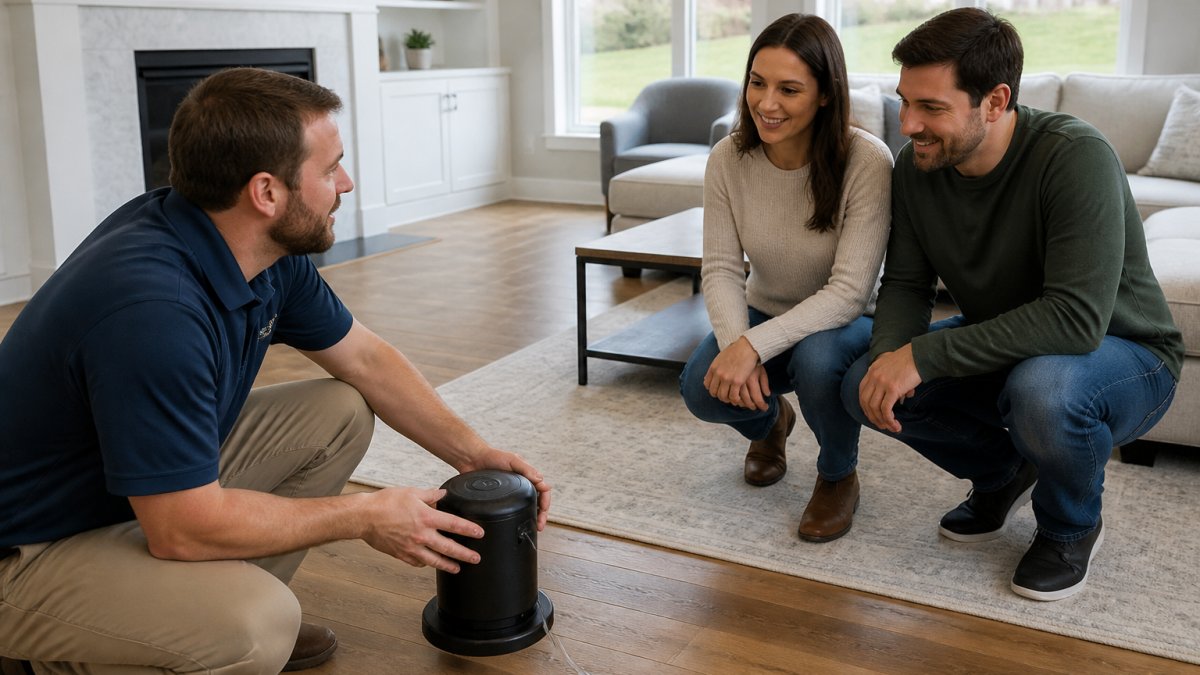
- Placement. The test device goes in the lowest livable level of the home, usually the basement or a regularly used first-floor room. Crawl spaces and unoccupied cellars are not livable space, so they are not the test location.
- Closed-house conditions. Doors and windows stay closed except for normal entry and exit, and window air conditioners are not run on a setting that pulls in outside air. The EPA's testing guidance calls for these closed conditions for at least 12 hours before the test begins and throughout the test period. A test run with windows open is not a valid test, and it usually reads low.
- Retrieval and lab analysis. The device is collected and sent to a lab. Results commonly come back within a few days of collection.
That closed-house requirement is where transactions go sideways. In a vacant house, nobody is there to keep windows shut, and a well-meaning seller or agent may air the place out before a showing. If you suspect the protocol was broken, treat the result as unreliable and request a confirmatory test.
Short-term versus long-term tests
A short-term test runs 2 to 4 days and is built for buyers on a deadline, but it captures a snapshot. Radon levels move with weather, soil moisture, and how tightly the house is sealed, so a short test can read high or low relative to the annual average. A long-term test runs 90 days or more and gives a better picture, but it rarely fits inside a purchase contract. For a transaction, short-term is the practical choice.
DIY kit, continuous monitor, or professional test
There are three common paths:
- Charcoal canister kits. Low cost and simple, but you handle placement and retrieval yourself, with no way to see whether conditions held.
- Continuous radon monitors. Electronic units that log hourly readings and can flag tampering or unusual conditions, showing whether the closed-house protocol held.
- Professional testing as an inspection add-on. The tester places and retrieves the device, documents conditions, and delivers results that are defensible in a negotiation.
If you already own the home and time is not pressing, the Tennessee Radon Program provides free charcoal canister test kits to homeowners. That's useful for a current owner, but a poor fit for a buyer who needs a documented result inside a contingency window.
How to check your tester
Tennessee licenses home inspectors, and every inspector must hold a current license. You can verify one at verify.tn.gov. We have seen inspectors working on lapsed licenses, so it is worth two minutes before you book. For radon, ask whether the inspector places and retrieves the device, whether a lab analyzes it, and what happens if closed-house conditions are disturbed.
What this means for your decision
Build the test into your inspection contingency from the start. It needs to start early enough that a confirmatory test still fits if the first result is borderline. Buyers who wait until the last few days often have to choose between an unclear result and asking for an extension.
When you are ready to schedule, get a quote online and tell us your contingency deadline. We will confirm whether the timeline works before you commit.
What Is a High Radon Level in a Home
Radon levels are measured in picocuries per liter (pCi/L). The key number is 4 pCi/L, the action level recommended by the EPA (the EPA). At or above 4 pCi/L, the EPA recommends taking action, typically through radon mitigation.
What matters is what the number means for your situation. A level of 5 pCi/L doesn't automatically kill a deal, but it does mean the seller may need to install or upgrade a mitigation system, or you may need to negotiate a credit to cover that cost.
What to Do If a Radon Test Is High
If your radon test comes back at or above 4 pCi/L, you have options. The most important thing is not to panic.
Your first step is to confirm the result. Many buyers request a second test to rule out a false reading or temporary spike.
Your second step is to understand what mitigation looks like. A radon mitigation system typically vents radon gas from beneath the foundation to above the roofline, where it disperses safely.
Your third step is to negotiate. You can ask the seller to install a mitigation system before closing, or request a credit to cover the cost yourself.
Radon Test Results and Home Purchase Negotiations
Once you have radon test results, they become part of your negotiating position. Here is a practical sequence for where testing fits in the contract timeline and what to decide at each stage.
Stage 1: Before you sign the offer
Read the purchase agreement for the inspection contingency and note the deadline. That date drives everything else. If the window is tight, ask whether radon testing can start the same day as the general inspection so a confirmatory test still fits.
Also ask for the seller's disclosure. In Tennessee, sellers complete a residential property condition disclosure, and radon questions appear on it. A disclosure that says radon was never tested is not a red flag by itself, but it tells you the test is on you.
Stage 2: During the contingency window
Schedule the radon test as an add-on to the full inspection. The device goes down during the inspection visit, and closed-house conditions run from there. When results arrive, sort them into one of three buckets:
- Below the action level. Move forward. Keep the result with your closing documents so you have a baseline for later.
- At or near the action level. This is the gray zone most guides ignore. A result of 4 pCi/L or just under it does not settle the question. Ask for a confirmatory short-term test, ideally with a continuous monitor so you can see whether conditions held, or negotiate as if mitigation may be needed. Do not let a single borderline reading get treated as a clean bill of health.
- Clearly elevated. Move to Stage 3.
Stage 3: Deciding what to ask for
With an elevated result in hand, you have three realistic paths:
- Ask the seller to install a mitigation system before closing. You get a working system at move-in, but you inherit the seller's contractor choice and have limited ability to verify the work before possession.
- Ask for a credit and handle mitigation yourself after closing. You choose the contractor and system, and can verify the result with your own post-mitigation test. The trade-off is that you carry the project and the timing.
- Renegotiate price or walk away. Reasonable when the radon finding is one of several significant issues and the numbers no longer work.
There is no single right answer. What matters is that you decide deliberately rather than letting the deadline decide for you.
Stage 4: After mitigation, verify
If a system is installed before closing, ask for the post-mitigation test results and the system's warranty information. A mitigation system is proven by a follow-up test showing the level dropped, not by installation. If you handle mitigation after closing, plan a verification test and retest every couple of years or after major renovations.
A note on who pays
Custom varies. In many transactions the seller covers mitigation when elevated radon turns up during the buyer's inspection period, and the buyer covers the test. Neither is a rule, and everything is negotiable. What is not negotiable is having a documented result before your contingency expires. Without it, the issue becomes yours after closing.
That is the real value of testing before you buy. It moves a hidden cost from after closing to before it, where you still have leverage.
Adding Radon Testing to Your Home Inspection
Radon testing is typically added to a full home inspection rather than performed as a standalone service. When you schedule your inspection, request radon testing as an add-on.
This approach is efficient because it combines everything into one process. You get your general inspection report covering the roof, foundation, HVAC, electrical, plumbing, and other major systems, plus radon results.
One important note: if you already own a home and want to test for radon without a time constraint, the Tennessee Radon Program offers free charcoal canister test kits for homeowners.
Next Steps: Schedule Your Inspection and Testing
When you're ready to make an offer, include an inspection contingency in your purchase agreement. This gives you time to hire an inspector, get results, and negotiate if issues are found.
Contact Integrity Inspection Service to schedule your home inspection and request radon testing as an add-on. We'll work with your timeline, answer your questions, and deliver a clear report that helps you understand the property's condition.
Getting a quote online is the easiest way to get started.
Frequently Asked Questions
Should you get a radon test before buying a home?
Yes. Radon is a colorless, odorless gas that can accumulate in homes and pose health risks. Testing before purchase gives you critical information to negotiate repairs, request mitigation, or walk away if levels are unsafe. A radon test is often added to a home inspection, so you get results alongside other findings about the property's condition.
How long does radon testing take during a home purchase?
A radon test typically runs for 2 to 4 days. This short-term testing period is standard during real estate transactions. The test is non-invasive, a small device sits in the lowest livable level of the home, and the house must remain in closed-house conditions (windows and doors shut) for accurate results. Results are ready within days, not weeks.
What is considered a high radon level in a home?
The EPA action level is 4 picocuries per liter (pCi/L). Levels at or above this warrant mitigation. Even levels between 2 and 4 pCi/L may be worth addressing, depending on your risk tolerance and how long you plan to live in the home. Your inspector can explain what your specific results mean and recommend next steps.
Who pays for radon testing and mitigation if levels are high?
That depends on your purchase agreement. Many buyers request the seller to test and mitigate before closing, or negotiate a credit toward repairs. Some buyers choose to test and mitigate after purchase. Clarify expectations in your offer so there's no confusion later. Your inspector can explain typical market practices and help you understand your options.
Buying a home without understanding its radon level is like signing a contract without reading it. You're taking a risk you don't have to take. Radon testing before buying a home is one of the most practical decisions you can make in a real estate transaction. At Integrity Inspection Service, we've spent over 20 years helping buyers in East Tennessee get the facts they need to move forward with confidence. Let us give you that same clarity. Get a quote online today.